
Paul Feyerabend
Austrian philosopher who argued against universal scientific methods.

Unknown author · Public domain
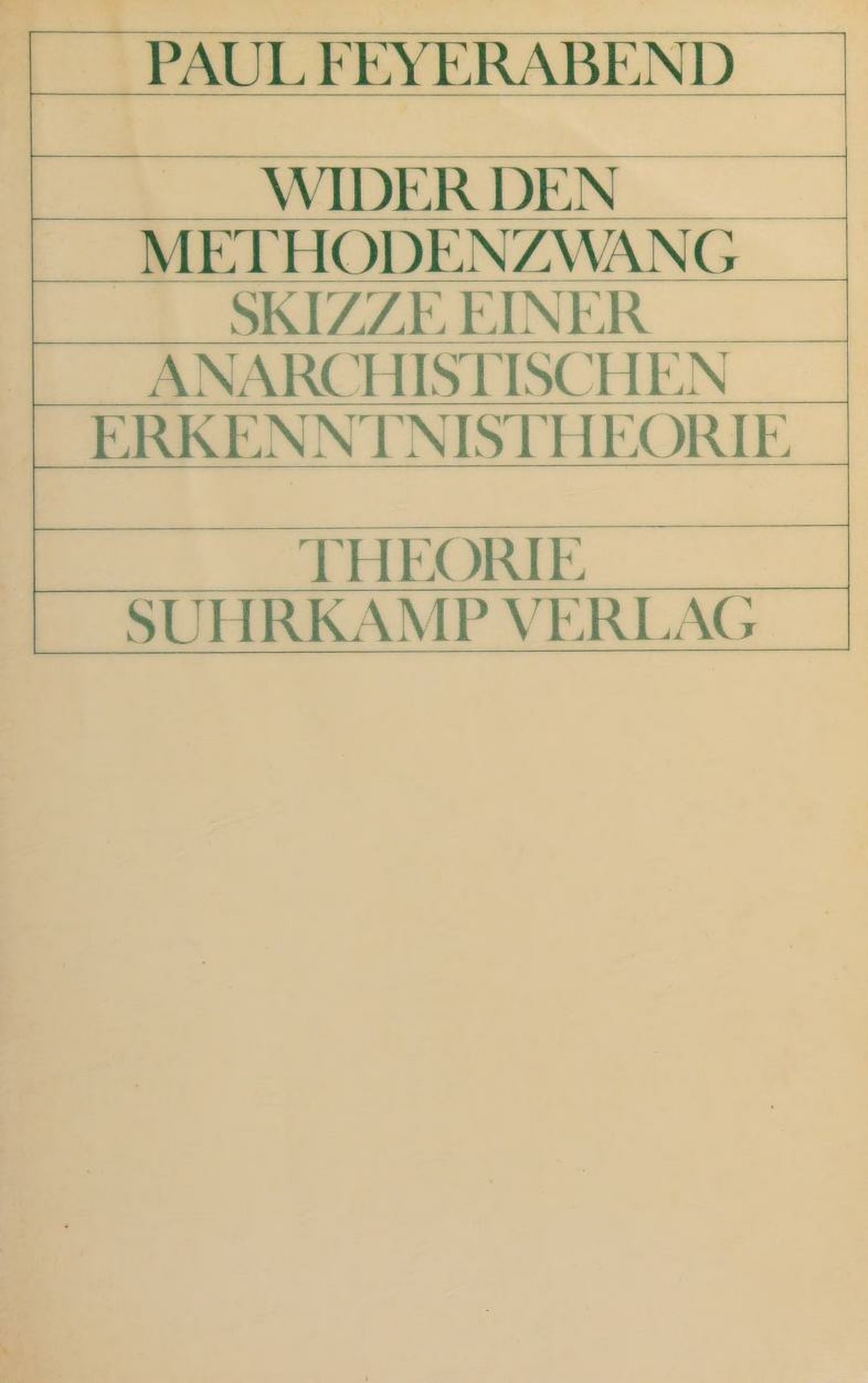
Paul Karl Feyerabend was an Austrian philosopher best known for his work in philosophy of science. He is recognized as one of the most important 20th-century philosophers of science. In a 2010 poll, he was ranked as the 8th-most significant philosopher of science. He is often mentioned alongside Thomas Kuhn, Imre Lakatos, and N. R. Hanson as a crucial figure in the historical turn in philosophy of science. His most famous work is *Against Method* (1975), wherein he argues that there are no universally valid methodological rules for scientific inquiry.
- born
- January 13, 1924
- died
- February 11, 1994
- field
- Philosophy of science
- nationality
- Austrian
- known_for
- Against Method (1975), scientific pluralism, historical turn in philosophy of sc
Verified Timeline
Lore & Background
Feyerabend was born in 1924 in Vienna, Austria. His father was a civil servant; his mother was a seamstress who died on July 29, 1943 by suicide. Raised Catholic, he attended the Realgymnasium, where he excelled as a top student, especially in physics and mathematics. At 13 he built, with his father, his own telescope, which allowed him to become an observer for the Swiss Institute of Solar Research. He was a voracious reader and casually stumbled onto philosophy through works by Plato, Descartes, and Büchner. He later encountered philosophy of science through the works of Mach, Eddington, and Dingler. During high school, he began his lifelong interest in singing, singing in a choir under Leo Lehner and later training formally under Adolf Vogel. During the Nazi occupation, Feyerabend was drafted into the German Arbeitsdienst in April 1942. He volunteered for officer school and from December 1943 served as an officer on the northern part of the Eastern Front. He was hit by three bullets while directing traffic; one hit him in the spine, leaving him partially paralyzed for the rest of his life. After the war, he recovered in Weimar, worked in public entertainment, and studied at the music academy in Weimar. He later moved to Vienna and pursued a PhD at the University of Vienna, originally intending to study physics, astronomy, and mathematics. His academic career began as a lecturer in philosophy of science at the University of Bristol (1955–1958), followed by three decades at the University of California, Berkeley (1958–1989). He held joint appointments at University College London (1967–1970), the London School of Economics (1967), the FU Berlin (1968), Yale University (1969), the University of Auckland (1972, 1975), the University of Sussex (1974), and the ETH Zurich (1980–1990).
Reader's Guide
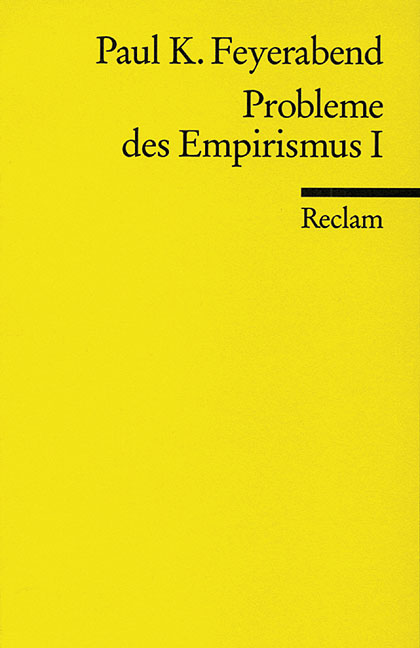
Feyerabend's most famous work is *Against Method* (1975), wherein he argues that there are no universally valid methodological rules for scientific inquiry. He also wrote on topics related to the politics of science in several essays and in his book *Science in a Free Society* (1978). His later works include *Wissenschaft als Kunst (Science as Art)* (1984), *Farewell to Reason* (1987), *Three Dialogues on Knowledge* (1991), and *Conquest of Abundance* (released posthumously in 1999). The uncompleted draft of an earlier work was released posthumously in 2009 as *Naturphilosophie* and translated to English in 2016 as *Philosophy of Nature*. His final work was an autobiography, *Killing Time*, which he completed on his deathbed. Feyerabend wrote about numerous issues at the interface between history and philosophy of science and ethics, ancient philosophy, philosophy of art, political philosophy, medicine, and physics. His work on scientific pluralism has been markedly influential on the Stanford School and on much contemporary philosophy of science. He was also a significant figure in the sociology of scientific knowledge. His lectures were extremely well-attended, attracting international attention. In line with a humanistic interpretation, the Paul K. Feyerabend Foundation was founded in 2006 in his honour, promoting the empowerment and wellbeing of disadvantaged human communities.
Did You Know?
- Feyerabend built his own telescope at age 13 with his father and became an observer for the Swiss Institute of Solar Research.
- He was hit by three bullets while directing traffic on the Eastern Front; one hit his spine, leaving him partially paralyzed for life.
- Feyerabend's mother died by suicide on July 29, 1943.
- He turned down an offer to be assistant to the Marxist playwright Bertolt Brecht at the East Berlin State Opera.
- In 1970, the Loyola University of Chicago awarded Feyerabend a Doctor of Humane Letters Degree honoris causa.
A Peripatetic Academic Life
Feyerabend's institutional journey was remarkably wide-ranging for a scholar whose primary base remained anchored in one place. After a brief stint as a lecturer in philosophy of science at the University of Bristol between 1955 and 1958, he settled at the University of California, Berkeley, where he would spend the next three decades teaching. Yet Berkeley was never his sole address. Over the years he held joint appointments at University College London, the London School of Economics, the Free University of Berlin, Yale, the University of Auckland (twice), the University of Sussex, and ETH Zurich. He also delivered lecture series at the University of Minnesota, Stanford, the University of Kassel, and the University of Trento. This constellation of affiliations across two continents and multiple decades speaks to a scholar who refused to be contained by a single department or national tradition. His lectures drew extremely large audiences and attracted international attention, suggesting that his reputation preceded him wherever he spoke. The pattern reveals a thinker who treated geography as a resource for intellectual cross-pollination rather than a fixed identity.
A Prolific and Provocative Bibliography
Feyerabend's written output spans a wide range of topics and formats, reflecting a mind that resisted disciplinary boundaries. His most celebrated book, Against Method (1975), challenged the assumption that scientific inquiry must follow universally valid methodological rules. He extended his critique into the political sphere with Science in a Free Society (1978), examining how science intersects with power structures. Later volumes include Wissenschaft als Kunst (1984), Farewell to Reason (1987), and Three Dialogues on Knowledge (1991). A posthumous collection, Conquest of Abundance (1999), gathered essays from the 1970s through his death. An unfinished earlier manuscript was published in 2009 as Naturphilosophie and translated into English in 2016 as Philosophy of Nature, presenting his reconstruction of natural philosophy from the Homeric era to the mid-twentieth century. His writings touched on ethics, ancient philosophy, the philosophy of art, political philosophy, medicine, and physics. His final act as a writer was Killing Time, an autobiography completed on his deathbed. His correspondence and Nachlass materials continue to be published, ensuring that new facets of his thought keep emerging.
Legacy and the Humanist in Science
Feyerabend's standing in the history of philosophy of science is firmly established. In a 2010 poll he was ranked the eighth-most significant philosopher of science, and he is routinely grouped with Thomas Kuhn, Imre Lakatos, and N. R. Hanson as a key figure in what is called the historical turn. His advocacy of scientific pluralism has exerted a marked influence on the Stanford School and on much of contemporary philosophy of science, while his engagement with the sociology of scientific knowledge broadened his reach further. Ian Hacking, writing his obituary, captured something essential: Feyerabend was a humanist in the old-fashioned sense, someone who belonged to both the arts and the sciences, and he was also, in Hacking's words, fun. In 1970, Loyola University of Chicago honored him with a Doctor of Humane Letters degree. The Paul K. Feyerabend Foundation, established in 2006, extends his humanistic concerns into practical work, promoting the empowerment and wellbeing of disadvantaged communities, strengthening solidarity, and sustaining cultural and biological diversity. Even in the cosmos, his name endures: asteroid (22356) Feyerabend orbits in his honor.
A Vienna Childhood of Wonder and Dissonance
Feyerabend was born in Vienna in 1924 into a working-class household on Wolfganggasse, a neighborhood where gypsy musicians, flamboyant relatives, illusionists, sudden accidents, and heated quarrels formed the texture of daily life. His paternal grandfather had been the illegitimate child of a housekeeper named Helena Feierabend, who introduced the distinctive 'y' into the family name. His father, originally from Carinthia, had served as a merchant marine officer in World War I before becoming a civil servant in Vienna; his mother, a seamstress from Stockerau, died by suicide in 1943. Feyerabend excelled at the Realgymnasium, particularly in physics and mathematics, and at thirteen he and his father built a telescope that earned him a place as an observer for the Swiss Institute of Solar Research. A voracious reader of mystery novels and plays, he stumbled into philosophy through Plato, Descartes, and Büchner, and later through Mach, Eddington, and Nietzsche's Zarathustra. He also discovered a lifelong passion for singing, training in a choir and later studying opera under Adolf Vogel. In his autobiography he recalled that magic and the mundane were separated by only a slight shift of perspective — a theme that would echo through his entire philosophical career.
Gallery
Frequently Asked Questions
Who is Paul Feyerabend?
Paul Karl Feyerabend (1924–1994) was an Austrian philosopher of science widely regarded as one of the most influential figures in that field during the twentieth century. He became especially prominent for challenging the idea that science operates under a single, fixed set of procedural rules.
What is *Against Method* and why does it matter?
Against Method (1975) is Feyerabend's most celebrated book, in which he argues that no universally valid methodological rules can legitimately govern scientific inquiry. The work sparked decades of debate about the nature of scientific progress and remains a required text in philosophy-of-science curricula worldwide.
How does Feyerabend connect to Kuhn, Lakatos, and Hanson?
These four thinkers are routinely grouped together as the key architects of what is called the historical turn in philosophy of science. Feyerabend's contribution in particular pushed the field to take seriously the messy, rule-breaking episodes in the actual history of science rather than idealizing a single rational procedure.
What does Feyerabend mean by scientific pluralism?
Scientific pluralism, in his formulation, holds that rival theories and methods can coexist legitimately and that no single framework must dominate a given domain. He drew on historical examples to show that progress often came from embracing competing approaches rather than enforcing uniformity.
When was Paul Feyerabend born and when did he die?
He was born on January 13, 1924, in Austria, and died on February 11, 1994. His career was centered in philosophy of science, and his legacy continues to be felt in discussions about the boundaries and methods of empirical inquiry.
More in Philosophers And Logicians 1-24
Related in Philosophers And Logicians
Links follow this subject's own source article.
Elsewhere in the Philosophers And Logicians universe
Spotted an error? Know more?
This is a living reference — every entry is fact-audited, and reader corrections feed straight into our audit queue. Suggest an edit · See this site's audit record